As businesses grow, financial information becomes increasingly difficult to manage across spreadsheets, disconnected accounting tools, bank statements, invoices, and separate business systems. Integrated accounting software brings these financial activities together in one connected environment, helping businesses improve accuracy, visibility, automation, and financial control.
In This Article
1. Centralizes Financial Data
One of the biggest challenges of traditional accounting is managing financial information across multiple spreadsheets, applications, and departments. This can create duplicate data, inconsistent records, and unnecessary reconciliation work.

Integrated accounting software creates a centralized financial environment where transactions, invoices, payments, receivables, payables, and general ledger information can work from the same underlying data.
Instead of asking different teams for separate versions of financial information, management can work from a consistent source of financial data.
2. Automates Repetitive Accounting Tasks
Accounting teams spend significant time on repetitive activities such as data entry, invoice processing, payment recording, transaction matching, and reconciliation.

Integrated accounting software can connect these activities so information entered in one part of the business can automatically flow into the appropriate accounting records.
Invoice Processing
Reduce manual invoice entry and improve invoice tracking across customers and suppliers.
Reconciliation
Match transactions with accounting records more efficiently and identify exceptions faster.
Payment Tracking
Keep payment information connected with invoices, vendors, customers, and financial records.
3. Improves Financial Accuracy
Manual data entry across multiple systems increases the risk of duplicate entries, incorrect amounts, missing transactions, and inconsistent financial records.
With an integrated accounting system, information can move automatically between connected business processes. This reduces unnecessary re-entry and makes financial records easier to maintain.
| Traditional Accounting | Integrated Accounting |
|---|---|
| Data entered in multiple systems | Data shared across connected modules |
| More manual reconciliation | Automated data synchronization |
| Higher risk of duplicate entries | Consistent financial records |
| Reports may require manual preparation | Reports generated from connected data |
4. Improves Cash Flow Management
Cash flow is one of the most important financial concerns for any business. Knowing how much money is coming in, what payments are due, and which customers have outstanding balances helps management plan ahead.
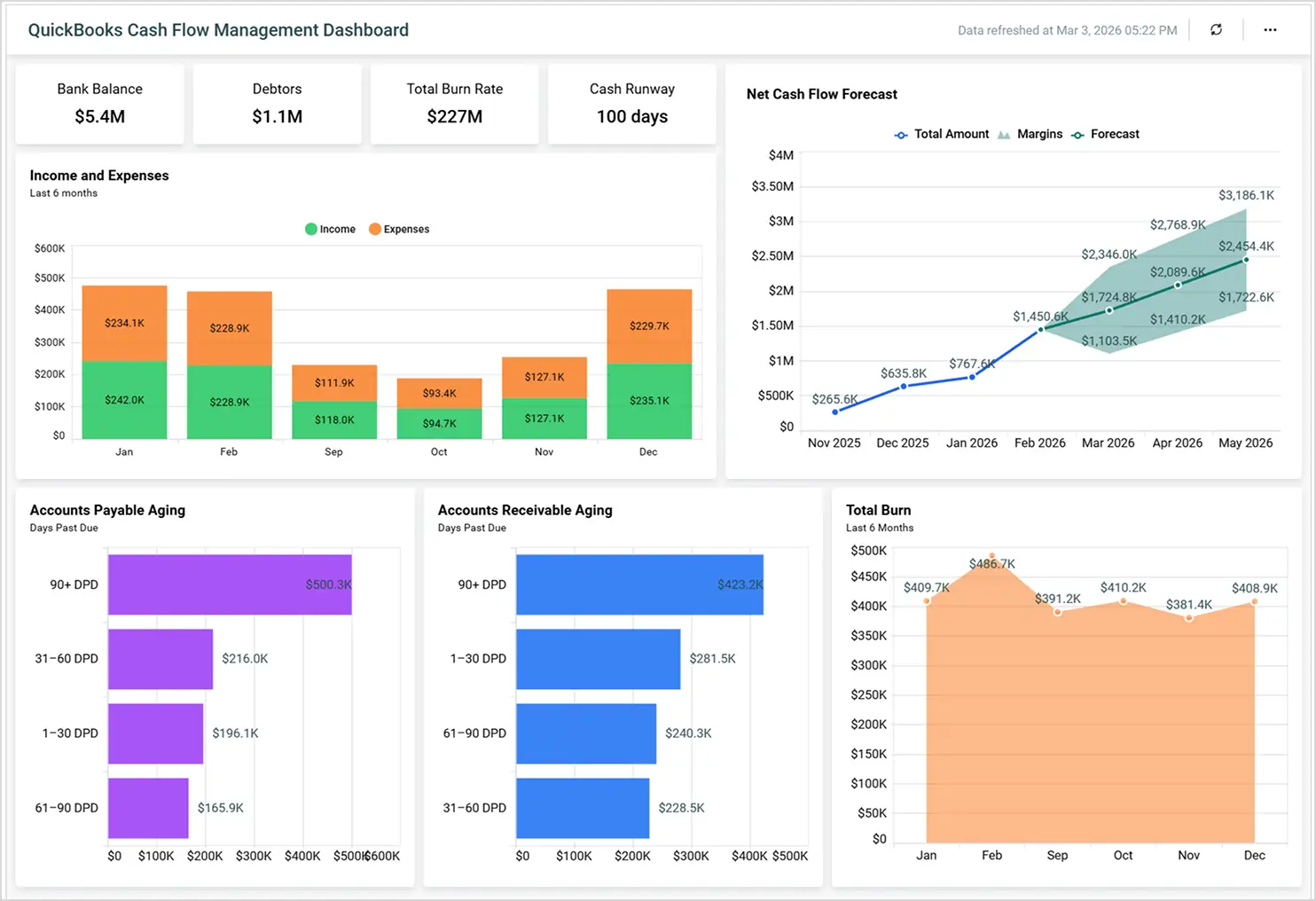
Integrated accounting software can bring accounts receivable, accounts payable, bank information, income, and expenses together. This gives finance teams a clearer picture of current liquidity and upcoming financial obligations.
Better visibility can help businesses identify overdue invoices, upcoming payments, spending patterns, and potential cash-flow pressure before they become larger problems.
5. Provides Real-Time Financial Reporting
Business leaders should not have to wait until the end of the month to understand the financial position of their company. Integrated accounting software can provide dashboards and reports based on current transaction data.

Depending on the system, businesses can monitor financial indicators such as revenue, expenses, profit and loss, cash flow, receivables, payables, and other important accounting metrics.
Financial Performance
Monitor revenue, expenses, profitability, and financial trends from one place.
Cash Position
Track available cash and understand upcoming inflows and financial obligations.
Financial Reports
Generate useful financial reports without combining information manually from different sources.
6. Connects Finance With Other Business Functions
Accounting does not operate separately from the rest of the business. Sales, purchasing, inventory, payroll, banking, and customer transactions can all affect financial records.

When these processes are connected, financial information can move more smoothly between departments. For example, a sales transaction can contribute to receivables, while a purchase can affect payables and inventory-related financial information.
This connected approach helps reduce information silos and gives finance teams better context about the transactions behind the numbers.
7. Supports Better Business Decisions
Good business decisions depend on reliable financial information. When financial data is fragmented or outdated, management may struggle to understand the real financial position of the business.
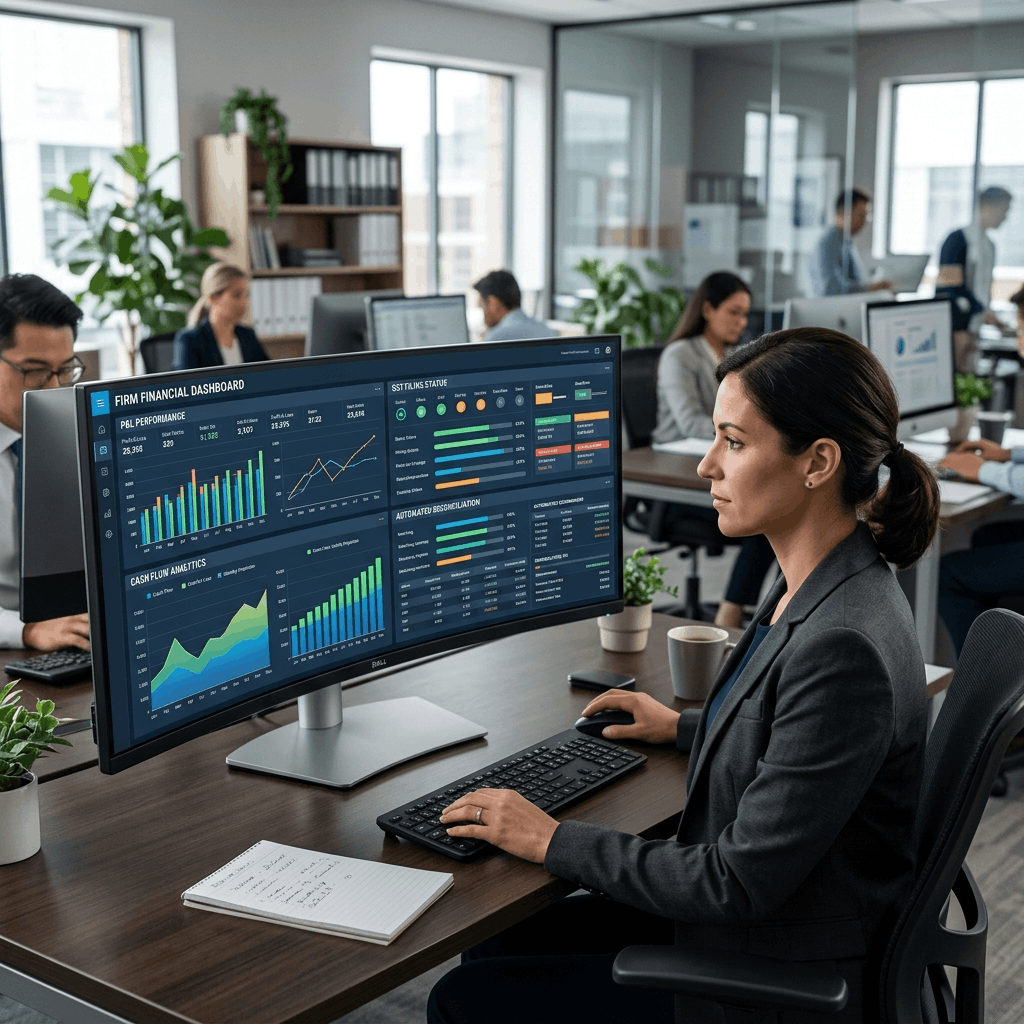
Integrated accounting software gives decision-makers access to financial information from connected business processes. This can help management evaluate profitability, control expenses, monitor cash flow, review receivables and payables, and plan future investments.
The result is a shift from simply recording financial transactions to using financial information as a strategic business resource.
Why Integrated Accounting Software Matters as Businesses Grow
A small business may initially manage accounting with spreadsheets or separate applications. But as transaction volumes, employees, customers, suppliers, branches, and business processes increase, disconnected systems become harder to manage.
More Transactions
Growing businesses process more sales, purchases, invoices, payments, and expenses.
More Financial Data
More departments and business activities create additional financial information to manage.
More Reporting Needs
Management needs faster and more detailed financial reporting as the company expands.
Greater Need for Control
Stronger approvals, access controls, audit trails, and financial processes become increasingly important.
What to Look for in Integrated Accounting Software
The right solution should fit the way your business operates and should be able to connect accounting with other important business processes.
- Centralized general ledger and financial data
- Accounts payable and accounts receivable management
- Automated invoice and payment workflows
- Bank integration and reconciliation
- Real-time financial dashboards and reports
- Expense and cash-flow management
- Role-based access and financial controls
- Integration with sales, inventory, payroll, and other systems
- Scalable architecture for growing businesses
Conclusion
Integrated accounting software is more than a digital replacement for traditional bookkeeping. It connects financial information with the wider business, reduces repetitive work, improves data consistency, and gives management a clearer view of financial performance.
By centralizing data, automating accounting processes, improving cash-flow visibility, and providing timely financial reporting, integrated accounting software can help businesses operate with greater efficiency and control.
For growing organizations, choosing an accounting platform that can connect finance with sales, purchasing, inventory, payroll, and other business processes can create a stronger foundation for long-term growth.
Ready to Simplify Your Business Accounting?
Explore how integrated accounting and ERP software can connect your financial operations, automate repetitive work, and provide better visibility into your business.
Explore ERP Solutions